Working Groups

Data Synthesis Working Group
The OBON Data Synthesis working group will take on the challenge of integrating datasets collected across the diverse programs in OBON that employ different methods and target different taxa.
We aim to demonstrate the ability to combine and leverage existing programs to track biodiversity indicators at increasingly global spatial scales. Key to this effort will be defining at what level data can be combined depending on varying methodology and overcoming barriers in reporting practices that improve interoperability.
read more…

Technology Development Working Group
The Technology Development Working Group (TDWG) aims to advance the use of eDNA technology for global marine biodiversity observations. The WG focuses on surveying the landscape of semi-autonomous to autonomous omics-based sampling instruments and deployment platforms and identifying challenges of scaling these types of instruments. The TWG has identified that 1) a diverse class of instrumentation needs to be developed for sampling different oceanic zones and regions; 2) these instruments will require utilisation of a wide range of deployable platforms (e.g., moorings, ASV, AUV), and 3) defining specific use cases (e.g., marine protected areas, offshore energy) will provide a path forward to scaling biodiversity observations.
read more…

Capacity Development Working Group
The Capacity Development Working Group discusses priorities for worldwide resource and network development and capacity strengthening, exchanging ideas and practices based on the experience of the WG members and their organisations. The group also plans future OBON capacity development/strengthening events, focussing on geographical locations where there is a strong engagement with OBON and a clear potential benefit to the region.
read more…

Protocols & Methodologies Working Group
The OBON Protocols & Methodologies working group is focused on developing a framework to compile and share the expanding methodological landscape in omics ocean observing. By improving transparency, the group aims to enhance the comparison of method efficiencies, establish optimal standard methods, enable data re-uses, and reduce uncertainties in genomic data use for management decisions. Together, these efforts will accelerate the progress and impacts of this field.
read more…

Reference Libraries Working Group
The OBON Reference Library working group aims to improve the utility and completeness of reference libraries used to identify environmental sequences. We will bring together those working in this space to allow efforts to coordinate, and to identify where group action should be taken to address needs within our field.
read more…

Policy Working Group
The OBON Policy Working Group focuses on positioning OBON as a bridge between cutting-edge marine biomolecular science and international policy decision-making. The WG has refined a theory of change centred on integrating biomolecular data into global, regional, and national frameworks such as the Convention on Biological Diversity (CBD), Biodiversity Beyond National Jurisdiction (BBNJ), IPBES, IPCC, and the World Ocean Assessment. The WG emphasises the need for policy-ready communications, stronger representation of OBON experts within advisory and negotiating bodies, and alignment of OBON data products with the practical needs of policymakers. It also recognises the importance of using established partners such as POGO and related international platforms to amplify OBON’s visibility and influence.
The WG’s near-term priorities include mapping where OBON members already participate in key policy fora, creating reusable policy briefs and communication templates, and developing demonstration cases that show how biomolecular observations can support fisheries management, marine protected areas, endangered species detection, and emerging issues such as deep-sea mining. Particular attention is given to the rapidly developing BBNJ Agreement, where members recognise both major opportunities and uncertainties around implementation.
read more…
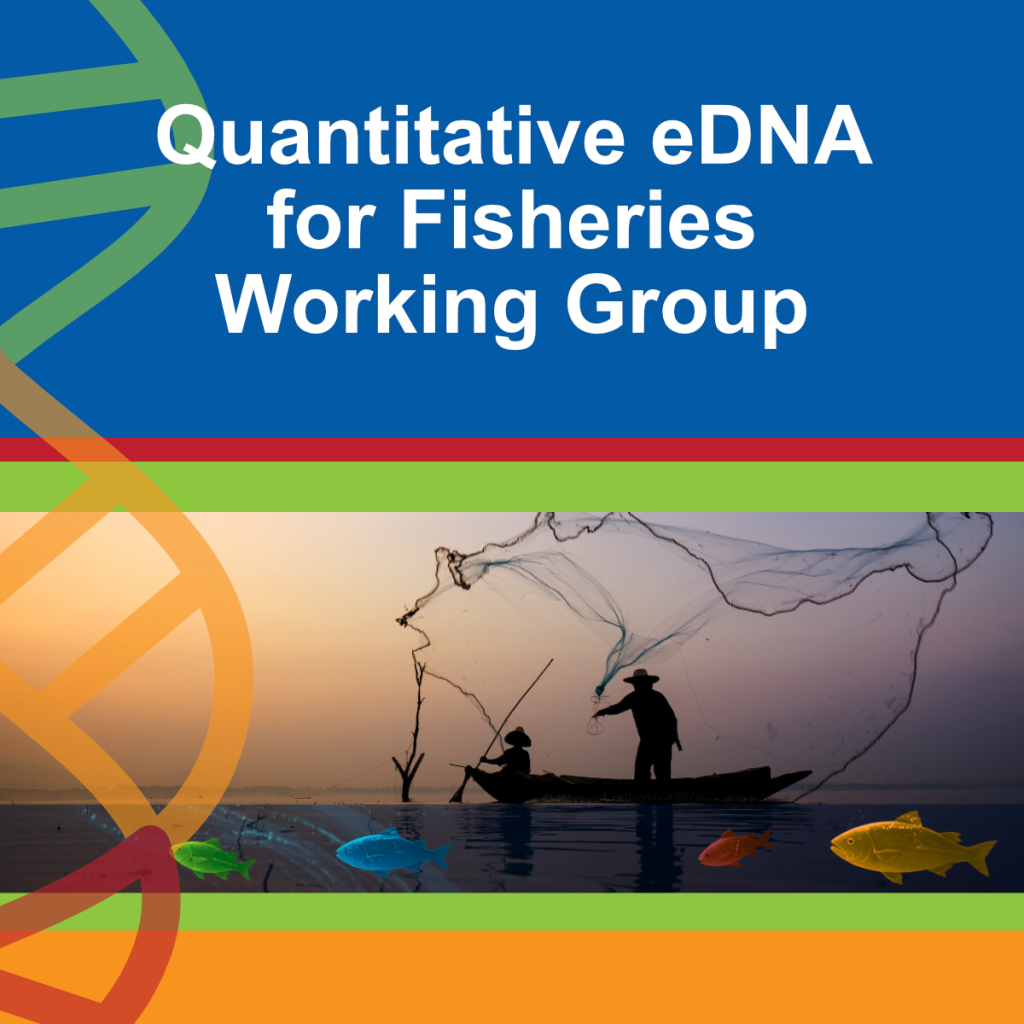
Quantitative eDNA for Fisheries Stock Assessments
Environmental DNA (eDNA) is a valuable tool that can enhance fish stock assessments by providing a non-invasive, cost-effective, and scalable way to monitor fish populations. A challenge is transitioning this valuable tool into the hands of fisheries experts aiming to manage fish populations. The OBON Quantitative eDNA for Fisheries Stock Assessments (QefSA) Working Group aims to expand adoption of environmental DNA (eDNA) analytics for fisheries applications by increasing the capability to create indices of eDNA abundance.
Our focused goal is to provide simple, concrete training modules employing a small subset of real-world data. We are currently seeking beta testers from around the globe to work with training modules based on the seminal paper by Shelton et al. 2022 (https://doi.org/10.1098/rspb.2021.2613). No molecular biology experience required. Please contact one of the Working Group Co-Chairs to gain access to our training modules.
read more…