Projects

HERPOPS (Assessing spatiotemporal dynamics in herring population structure under climate change)

Management areas (coloured) of herring stocks assessed by ICES are defined by geographic boundaries. Many management areas overlap, but stock discrimination is not accounted for, except in the Skagerrak (light green vs. orange). Location of baseline population samples (blue) and project partners (red) are marked. Basic knowledge of the spatiotemporal occurrence of populations in marine […]

HERPOPS (Assessing spatiotemporal dynamics in herring population structure under climate change) Read More »

eDNA Expeditions II

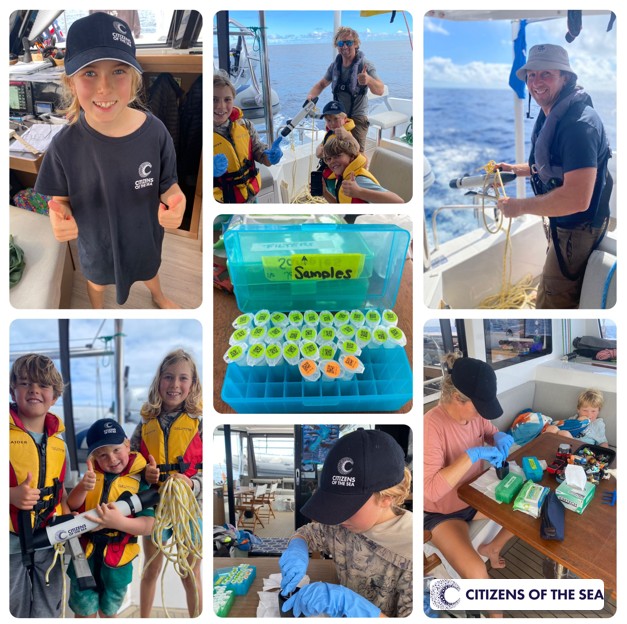
The “eDNA expeditions II” project is a citizen-science initiative designed to establish repeated eDNA sampling across marine protected areas. This project will expand access to marine biodiversity knowledge, particularly in underrepresented regions, while strengthening engagement with the ocean worldwide. Building on the success of the first eDNA expeditions (2022-2024), this new phase will scale up

eDNA Expeditions II Read More »

[Image: Taken on a campaign for biopsies from sperm whales, humpbacks and pilot whales outside Andenes in Northern Norway based on R/V Helmer Hansen. Credit: Sofie Søderstrøm]

Marma-Detox

[Image: Taken on a campaign for biopsies from sperm whales, humpbacks and pilot whales outside Andenes in Northern Norway based on R/V Helmer Hansen. Credit: Sofie Søderstrøm] Whales and polar bears in a petri dish: decoding marine mammal toxicology through in vitro and in silico approaches Large marine mammals, including polar bears and whales, fill

Marma-Detox Read More »

Australian Microbiome

The Australian Microbiome (AM) is a nationwide, collaborative project established in 2019 to characterise microbial diversity across Australia’s terrestrial and marine environments. It builds on previous initiatives and has been supported by a consortium of over 40 institutions, including government, research, and industry partners. AM enables large-scale spatial and temporal studies by resourcing the collection,

Australian Microbiome Read More »

Blowomics: Novel perspectives on non-invasive cetacean research using microRNA biomarkers in the exhaled breath

In human and veterinary medicine, blood is the most valuable sample to use to assess health status, as most health variables from multiple metabolic processes and organs are reflected there in real time. However, there is no practical method to obtain blood samples from large free-swimming cetaceans. While possible for smaller species, it obligates the

Blowomics: Novel perspectives on non-invasive cetacean research using microRNA biomarkers in the exhaled breath Read More »

Present and past climate change impacts on Norwegian fjord ecosystems (PASTIME)

[Images: Map of the sampling areas, sampling in the Arctic and western Norwegian fjords, opening and sampling of a sediment core in a dedicated ancient DNA laboratory] The aim of PASTIME is to use molecular tools to get a better understanding of the impact of environmental change on marine biodiversity. Longterm observations are needed to

Present and past climate change impacts on Norwegian fjord ecosystems (PASTIME) Read More »

ANEMONE Global: Advancing eDNA-Based Biodiversity Monitoring

ANEMONE Global is an international collaborative network dedicated to monitoring biodiversity using environmental DNA (eDNA). Founded in Japan in 2019, it has expanded to include 17 research groups from 12 countries, working together to develop standardized eDNA protocols and enhance biomolecular observations across marine and freshwater ecosystems. Through partnerships with universities, research institutes, NGOs, and

ANEMONE Global: Advancing eDNA-Based Biodiversity Monitoring Read More »

AMT-omics: Atlantic Meridional Transect ‘omics network

The Atlantic Meridional Transect (AMT) programme, established in 1995 and coordinated by Plymouth Marine Laboratory, has now conducted 30 research cruises between the UK and the South Atlantic. The structure and biogeochemical properties of planktonic ecosystems are studied in detail with each cruise spanning more than 100° of latitude with depths of 1000 m and

AMT-omics: Atlantic Meridional Transect ‘omics network Read More »

West Coast Ocean Biomolecular Observing Network (WC-OBON)

Biomolecular technologies can transform marine management, but their development has been siloed, hindering long-term data integration. The West Coast OBON, part of the UN Decade of Ocean Science for Sustainable Development, aims to harmonize methods and integrate data from ‘Omics platforms on the North American West Coast for sustainable marine management. Our goal is to

West Coast Ocean Biomolecular Observing Network (WC-OBON) Read More »

Scroll to Top